
Familiar Places. Brighter Days. · Greater Denver Talk with our care team: (303) 731-5393

Dementia care in Denver.

People living with dementia do best with familiar surroundings, steady routines and caregivers who understand how memory loss changes communication and behavior. Our dementia-trained caregivers provide exactly that, so your loved one can stay safely at home for longer.

An older man and a younger woman enjoying a card game at home. Illustrative photography.
20+ years
of home care history behind our approach
1k+
happy patients
Greater Denver
our local focus, from Boulder to Castle Rock
One purpose
more good days in a familiar home
What’s included

Dementia care for Denver families

  • Structured daily routines that reduce confusion and anxiety
  • Redirection and de-escalation for agitation and sundowning
  • Wander-risk planning and supervision
  • Memory-friendly activities: music, photos, familiar hobbies
  • Help with meals, hydration and medication reminders
  • Detailed visit notes so the family always knows how the day went

From bungalows in Park Hill to condos in Cherry Creek, our Denver caregivers help people with memory loss stay in the neighborhoods they have called home for decades.

Snow-day care plan. Backup caregivers close by in Denver, with a conversation about backup arrangements when weather affects travel.
Winter fall prevention. Icy steps and dry air are real Colorado risks; our home safety check covers both.
Hospital-to-home support. Coming home from a Denver-area hospital or rehab? We help coordinate the first days back.

Let’s talk about care in Denver.

Tell us a little about your situation and a care advisor in Denver can discuss next steps with you. No pressure and no obligation, just honest guidance.

  • A conversation about your needs and routines
  • Caregiver and schedule options
  • Next steps confirmed before care begins

Caring changes everything.

Start with a conversation.

Tell us who you’re caring for, where they live, and what would make the day a little easier.

Call (303) 731-5393

Our phone assistant can collect a few details for the care team. Ask for a human callback whenever you prefer. For emergencies, call 911.

How we handle your information
Your concerns, answered

It’s normal to have worries. Here are honest answers.

Families in Denver ask us these questions every day. If yours isn’t here, call and ask; there’s no pressure.

“Mom will never let a stranger into the house.”

Very common, and we plan for it. Caregivers are introduced gradually, often as a friend or helper, and build trust through coffee, music or a walk before any personal care begins.

“How do I know I can trust someone alone with Dad?”

Ask us about the assigned caregiver’s experience, screening, training and supervision. We discuss the help needed and communication expectations before care begins.

“What if we don’t click with the caregiver?”

Personality matters, especially with memory loss. Tell us what is not working so we can discuss a different match and available alternatives.

“What if the caregiver is sick, or it snows?”

We discuss how delays and absences will be handled, who to contact and what backup options are available. Severe weather can affect travel, so families should have a local emergency contact.

“Wouldn’t a memory care facility be safer?”

For many people with dementia, familiar surroundings mean less confusion and fewer bad days. Our home safety assessment, wander-risk planning and up to 24-hour care make home a safe option for longer. If a move ever becomes the right choice, we’ll tell you honestly.

“Dementia gets worse. Can you keep up?”

Yes. Care plans are reviewed regularly and grow with your loved one, from a few hours of companionship to overnight and 24-hour care, with the same familiar faces.

Ask us anything, free

What could a little support change?

See how home care could fit into the moments that matter to your family.

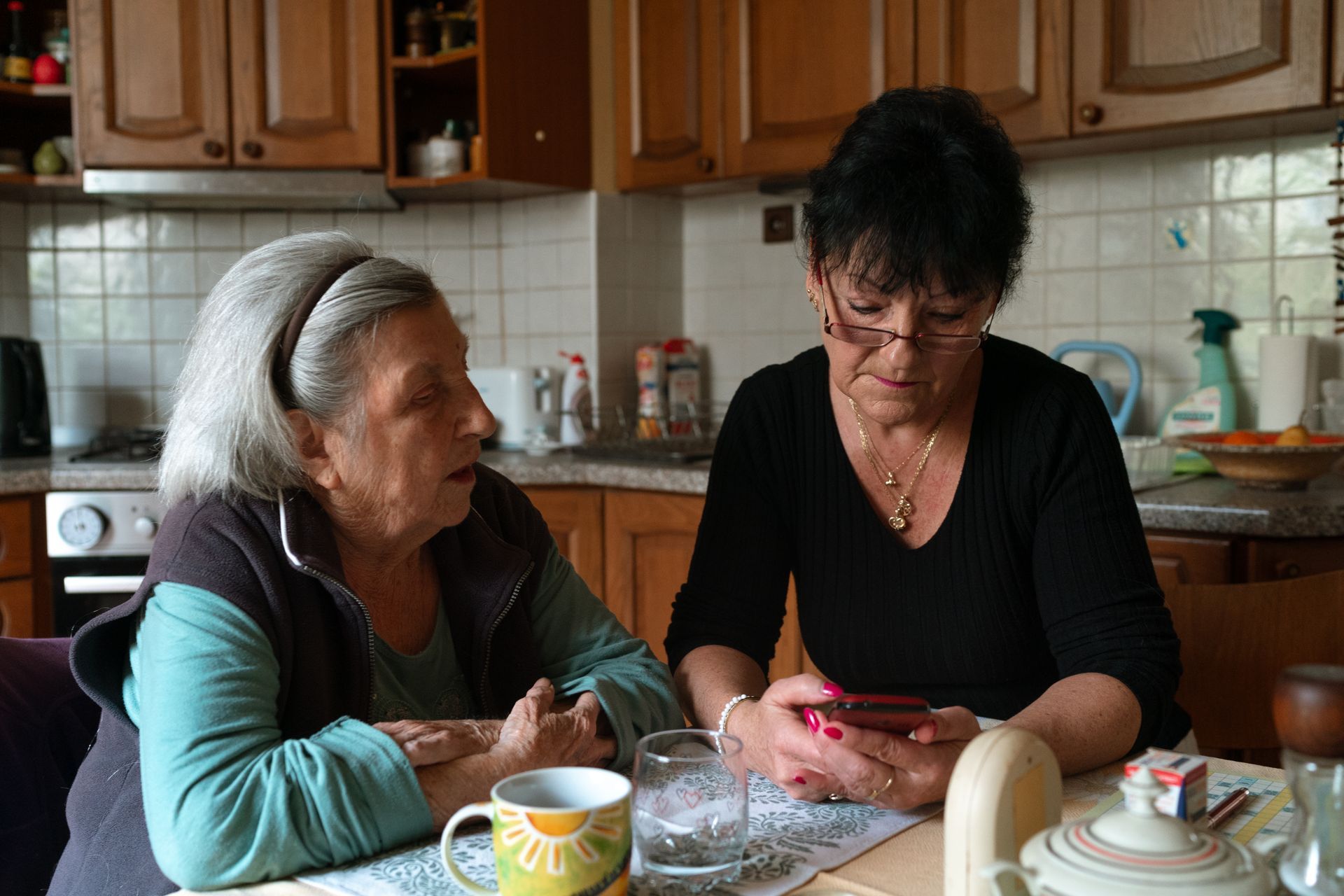
Two women spending time together at a kitchen table.

A familiar routine. A little more support.

Breakfast gets skipped. Getting ready takes longer. You find yourself calling several times just to check that the day has started.

What support could look like

A caregiver can help with breakfast, getting dressed and a gentle morning rhythm. We start with the routines your loved one knows and discuss the assistance that fits.

More reassurance in the everyday moments.

An older man and a younger woman enjoying a card game on a sofa.

An afternoon with something to look forward to.

The house is quiet. A favorite game or a good conversation could make the afternoon feel less lonely, but family cannot always be there.

What support could look like

Companionship can mean a familiar card game, looking through photographs, listening to music or making a snack together. We ask what brings your loved one comfort and enjoyment.

Connection built around the person.

Illustrative care examples and stock photography. Care plans and availability are confirmed individually. Photo credits

Navy Memory+ Home Care caregiver scrubs with the embroidered logo
Why families choose Memory+

Same home. More good days. Your peace of mind.

Dementia-trained caregivers

Specialized training in communication, redirection and dignity-first care, not just general home care.

Personalized care plans

Built around your loved one’s history, preferences and daily rhythms, and updated as needs change.

Consistent, familiar faces

We keep the same small team with your loved one, because familiarity matters even more with memory loss.

Clear expectations

Talk through caregiver qualifications, supervision, communication and scheduling before care begins.

How it works

From first call to first visit in three simple steps

  1. 1

    Free care consultation

    Tell us about the routines, support and timing that would make a difference for your family.

  2. 2

    In-home assessment

    We discuss the right assessment, the help needed and a proposed care plan before you decide.

  3. 3

    Meet your caregiver

    We discuss a suitable caregiver, agreed tasks and the schedule, then confirm arrangements before care begins.

Dementia care in Denver: FAQ

At what stage of dementia should we start home care?

Earlier is usually easier. Starting with a few hours a week while your loved one is still in the early stage lets them build trust with a caregiver before more help is needed.

Can you care for someone who gets agitated or resists help?

Yes. Our caregivers are trained in calm redirection and in introducing support gradually, often through shared activities before any personal care begins.

How do we know whether it is time to bring someone in?

Start with the situations that worry you: meals being missed, difficulty with bathing or dressing, getting lost, nighttime interruptions, or a family caregiver who cannot keep up. Write down when those things happen and what help is missing. You can speak with us before there is a crisis. A sudden change in health or confusion should be discussed promptly with a healthcare professional.

How soon can care start?

The start date depends on the assessment, location, care tasks, schedule and availability of an appropriate caregiver. Tell us if you have a discharge date or another deadline. We will discuss the earliest workable option and confirm arrangements before you rely on a start date.

How much does dementia care at home cost?

The cost depends on the support needed, the number and length of visits, and whether you need daytime, overnight or continuous coverage. We discuss those details with you and explain the proposed schedule and charges before care starts. Ask about minimum visit lengths, weekends, holidays, cancellations and any additional fees so you can compare the full cost.

A little guidance.
A little less overwhelm.

Practical reading for the questions that come up between conversations.

Same home. More good days.

Dementia care in Denver, from people who understand memory loss.